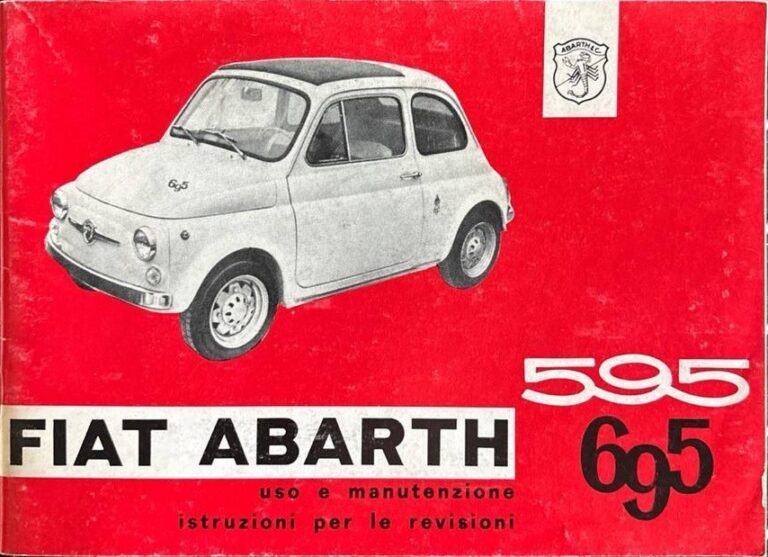



Head office and works:
Corso Marche 38
Torino
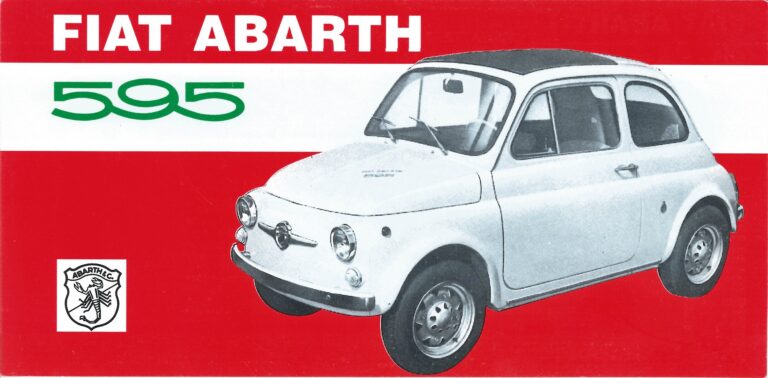
That is the address printed on the brochure “Abarth 595/SS”.
Abarth & C. was founded on 31 March 1949 in Bologna by Carlo Abarth and the Cisitalia racing driver Guido Scagliarini. Carlo Abarth, born in Vienna in 1908 as Karl Albert Abarth, had been a motorcycle racer and had worked at Cisitalia; when that company collapsed he took over its material. The emblem is the scorpion — his star sign.
The money came not from racing cars but from exhaust systems and tuning parts for production cars by Fiat, Lancia, Simca and Cisitalia: in 1962 the firm employed 375 people and delivered 257,000 silencers, about two thirds of them for export. After the move from Bologna to Turin — the sources vary between 1949 and 1951 — it took over the works at Corso Marche 38 in 1958, the address printed on this brochure.
The collaboration with Fiat began in 1952; from 1957 Fiat paid bonuses for racing results. On 31 July 1971 Carlo Abarth sold the company to Fiat, the sale being announced on 15 October; the racing department and the remaining cars went to Enzo Osella, a former Abarth mechanic. In 1981 Fiat dropped the name and revived it in 2007 as Abarth & C. S.p.A. Carlo Abarth had died in Vienna in 1979.
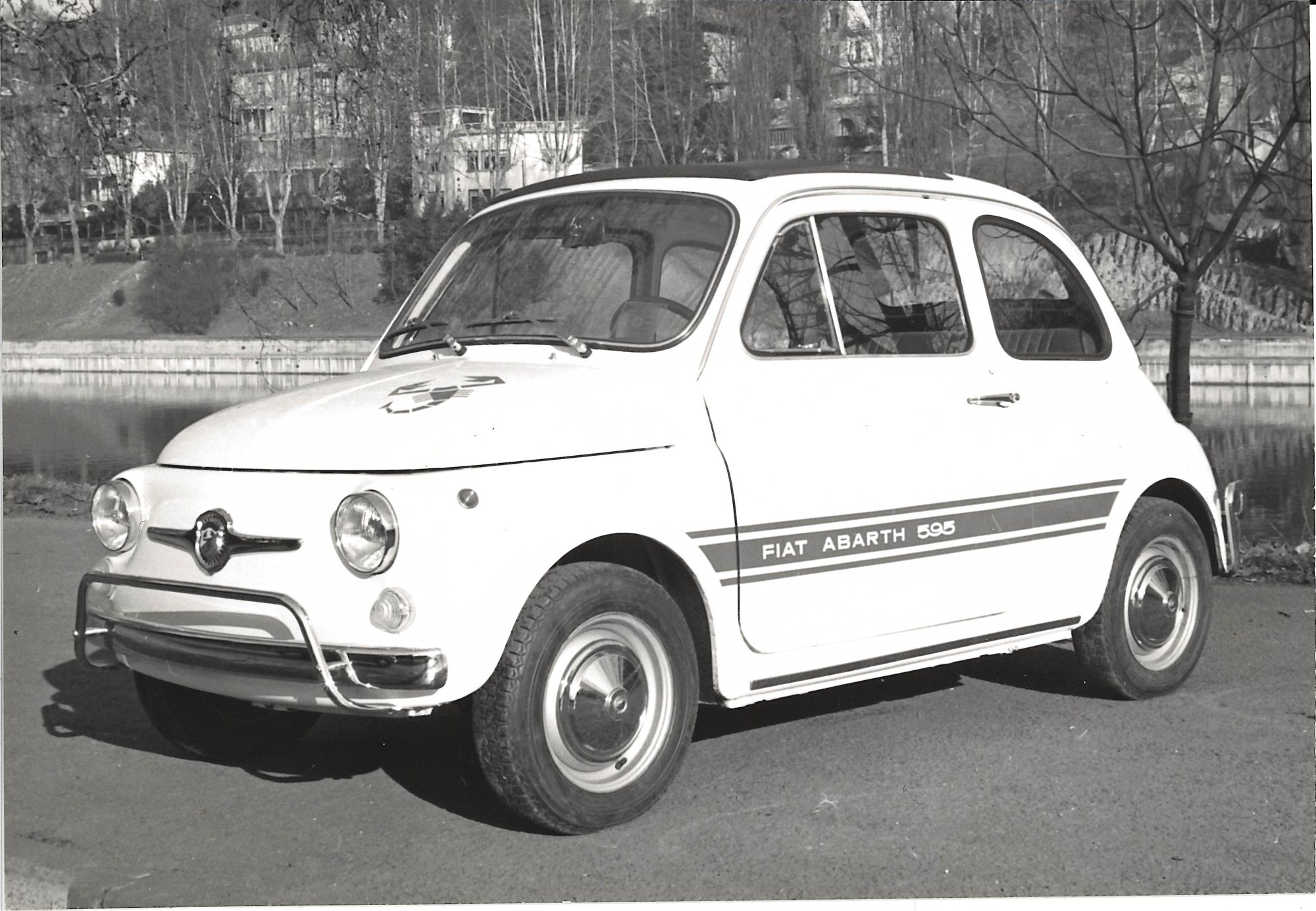
Abarth mainly sold conversions: in Turin a Fiat 500 became an Abarth 595. The 595 was shown at the Turin motor show at the end of October 1963; it was built in two series — until 1965 on the body of the 500 D, afterwards on that of the 500 F — and stayed on offer until the end of 1971. The 595 SS followed in February 1964, and in March 1964 Abarth also showed the 695 of 689 cc in Geneva.
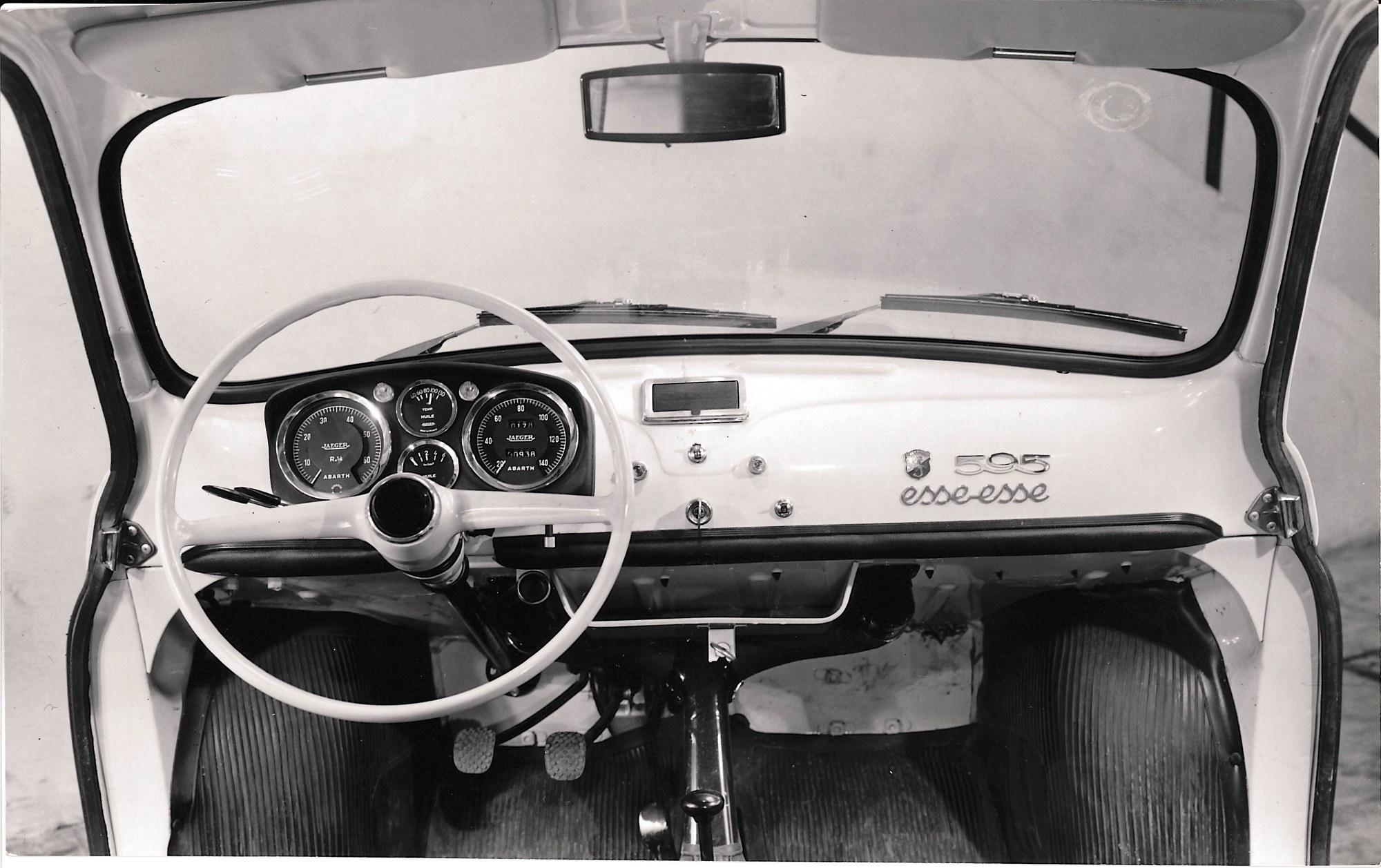
The brochure held in this archive sets three versions side by side: 595, 595 SS and 595/34. They share the two-cylinder engine of 593.707 cc (73.5 × 70 mm), the weight of 500 kg and the four-seat saloon body. The 595 gives 27 CV DIN at 5000 rpm and reaches 120 km/h, the other two 32 CV DIN and 130 km/h. They differ in the carburettor — C28PBJ against 34PBIC — and in the tyres, 125 × 12" against 125 × 12" / 135 × 12". At extra cost the sheet lists, among other things, half-shafts with universal joints, front disc brakes, an Abarth instrument panel, a wooden steering wheel and a racing exhaust system.
What the 34 in the name 595/34 stands for is written neither on the sheet nor in the sources that can be reached; in the brochure this version shares every figure with the 595 SS.