

Indestor
INdustrial DESign TORino
Head office:
Torino
Behind Indestor there was one man: Giacomo Bianco. He had run the OSI Centro Stile at Borgaro outside Turin — a studio set up in 1965 with some eighty people and closed again in November 1967. Two months later, in January 1968, Bianco opened his own office in Turin and worked from then on as a consultant to car makers. The name spells out the trade: INdustrial DESign TORino.
Two designs on Fiat mechanicals are on record. In 1974 the Croisette stood at the Geneva motor show, a two-seat beach car without doors on Fiat 126 mechanicals. Two years later it became the Cavalletta.
The Cavalletta
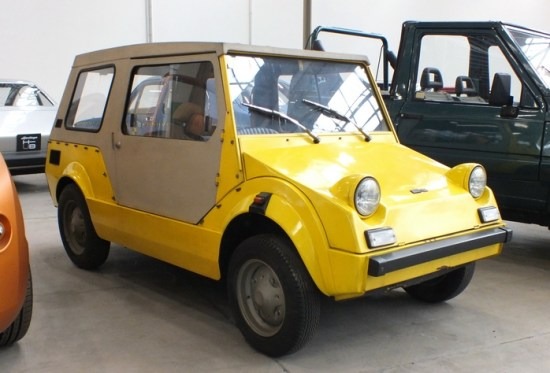
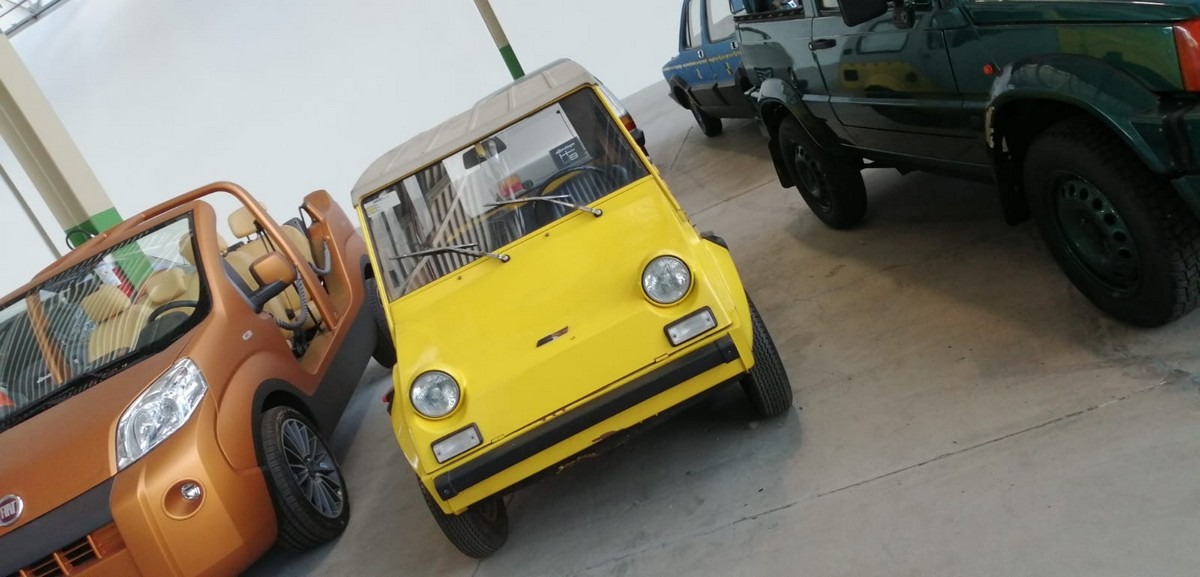
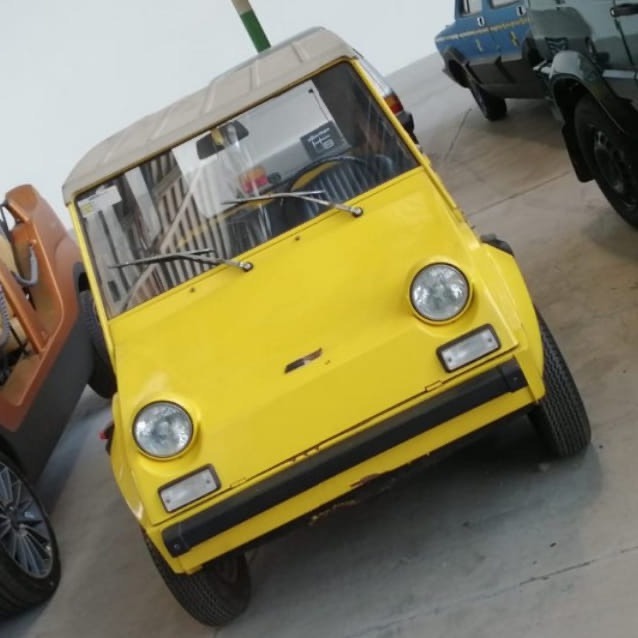
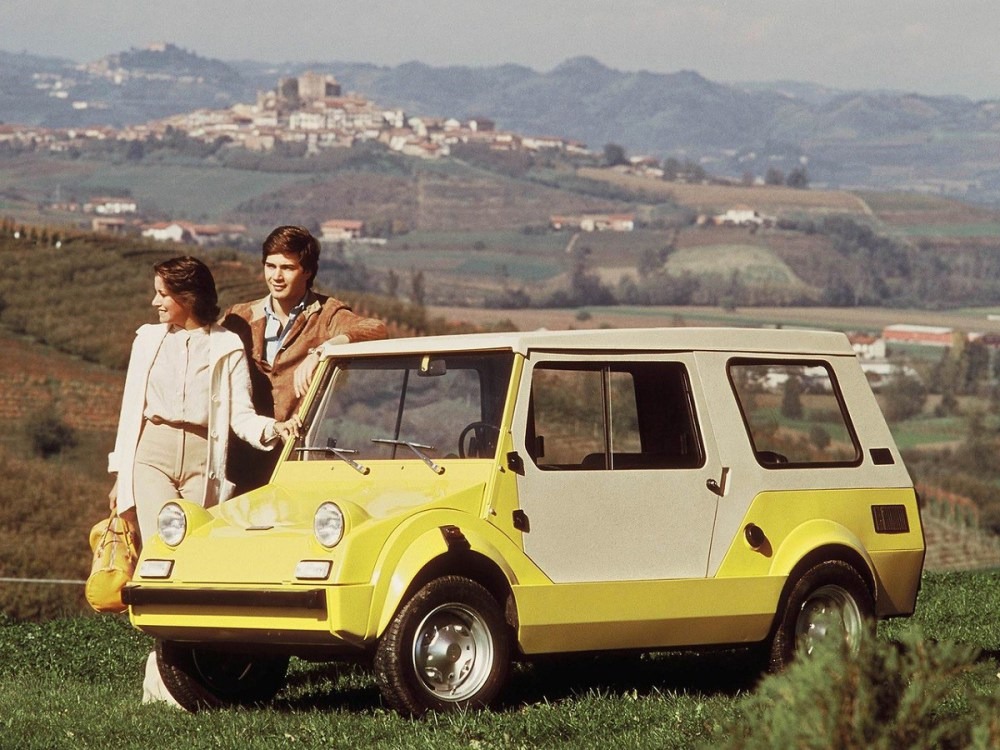
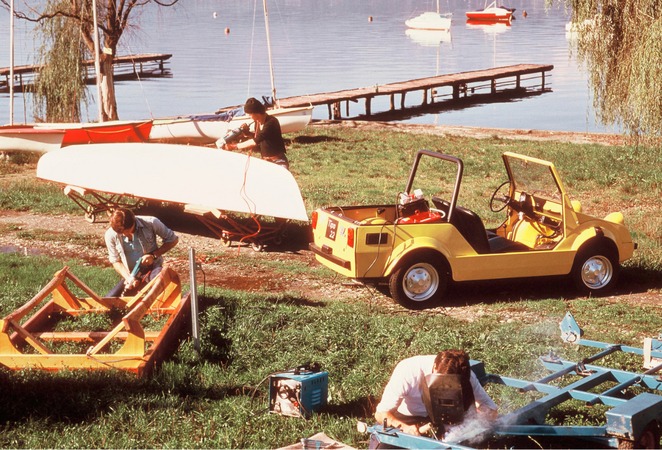
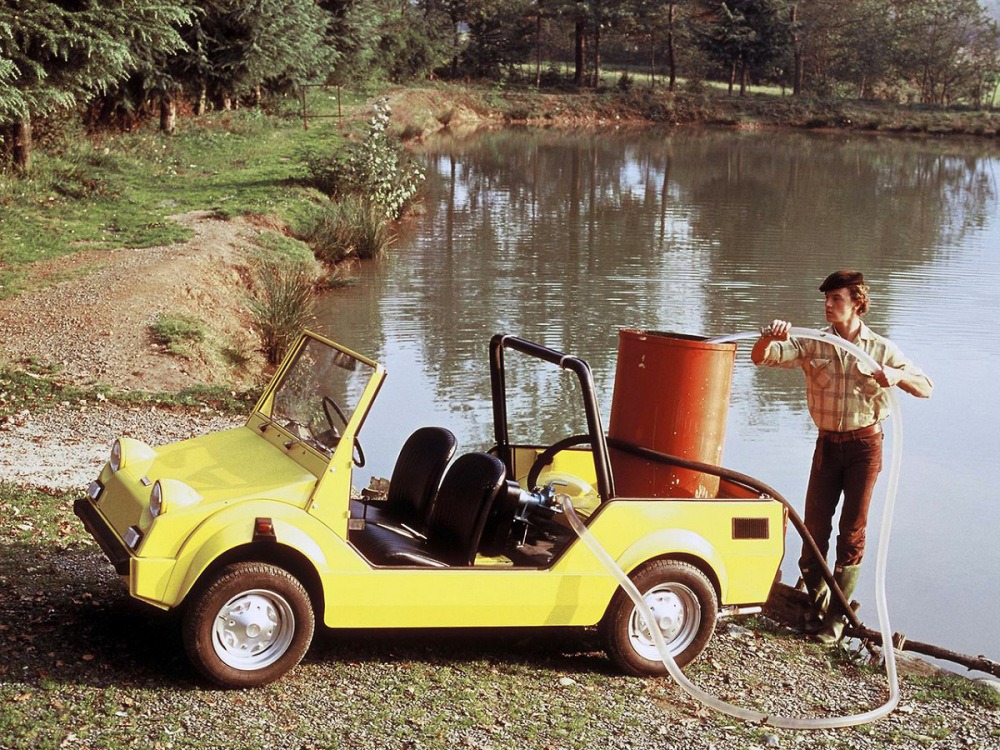
Cavalletta is the grasshopper. What the car was meant to be is set out in Fiat’s own press pack, held in this archive: a multi-purpose vehicle for leisure, rough ground and work — four people aboard, or four sacks of a hundred kilograms each.
Fiat calls it there “una proposta Fiat”, a Fiat proposal, and records that the car on the stand is a prototype fitted with equipment of an experimental or provisional nature. Which stand that was the pack does not say; none of its sheets carries a date, a number or a design office. That the Cavalletta stood at the Turin motor show of 1976, and that the design came from Indestor, is in the literature.
Floor pan, suspension, steering, clutch, gearbox, final drive and brakes come from the Fiat 126. The engine, though, is the one from the Fiat 500 Giardiniera — the flat two-cylinder, enlarged to 594 cc and placed under the loading platform at the rear. The platform therefore stays flat and, with only two aboard, can be extended right to the back. Output is 21.5 bhp (DIN), maximum torque 3.8 kgm.
Open, the Cavalletta runs without doors and without body sides, with a roll-over bar behind the front seats and a hood on sticks. For winter there is instead a rigid moulded plastic roof, with doors carrying sliding windows, side windows and an opening rear window. The front seats fold away completely, the rear bench comes out.
The four-speed gearbox carries a power take-off on the primary shaft giving around 12 hp. That runs water pumps, crop sprinklers and sprayers, or a 5 kVA 230-380 volt generator for saws, drills, welding sets, air hammers, milking machines and hedge trimmers.
The car is 3072 millimetres long and 1368 wide, the wheelbase measures 1843, the tracks 1142 at the front and 1203 at the rear, the ground clearance laden 150. In running order it weighs 490 kilograms and takes one person plus 400 kilograms. It does over 100 km/h and climbs a 28 per cent gradient in first gear. Braking is by drums on all four wheels with dual circuits; the wheels are 4 × 12 inches, with optional 4 × 13 inch rear wheels on 145 SR 13 tyres and a lower final drive ratio.
The Cavalletta never went into production, and no second car is known. Every figure above comes from the press pack; it is under Documentation, together with Fiat’s three press photographs.
Period photographs
The car today