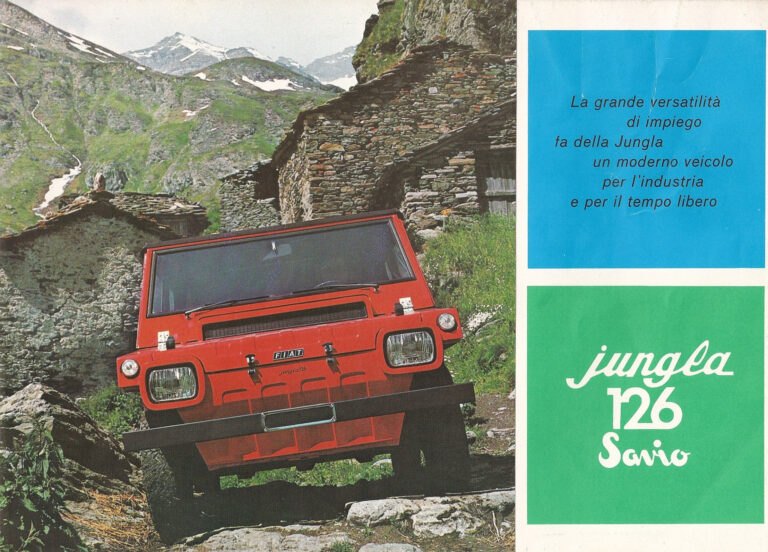




Jungla
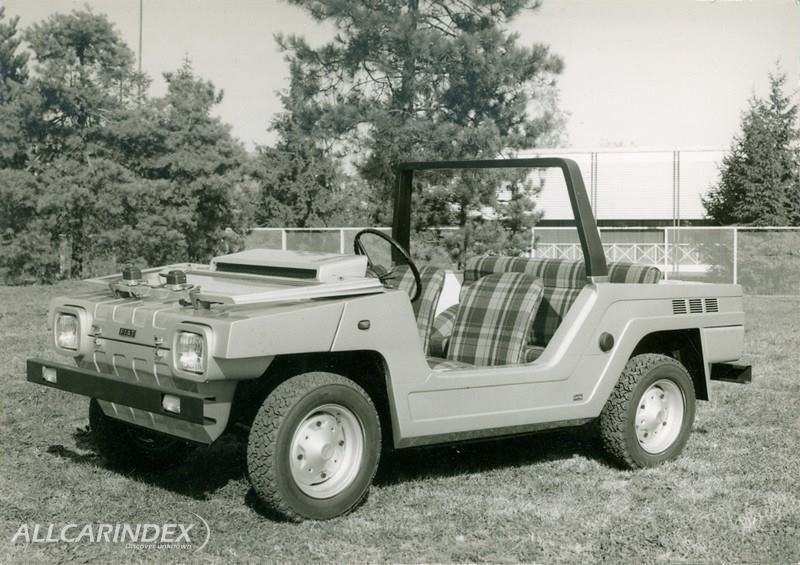
The Jungla is the only Savio model on these pages to be built in quantity – and like the others it stands on the Fiat 500. The car was shown at the 1965 Turin motor show, at first under the name «Giungla». The body is open and angular, the windscreen folds forward, the spare wheel hangs at the rear; until 1969 the doors were made of fabric, afterwards of sheet steel.
The Jungla was built until 1974. It never had four-wheel drive – only the rear wheels are driven. Private owners were not the only buyers: the Jungla served with the electricity utility ENEL, the telephone company SIP, the forestry service and the Carabinieri. A year after the Jungla the Ferves Ranger arrived from Turin.
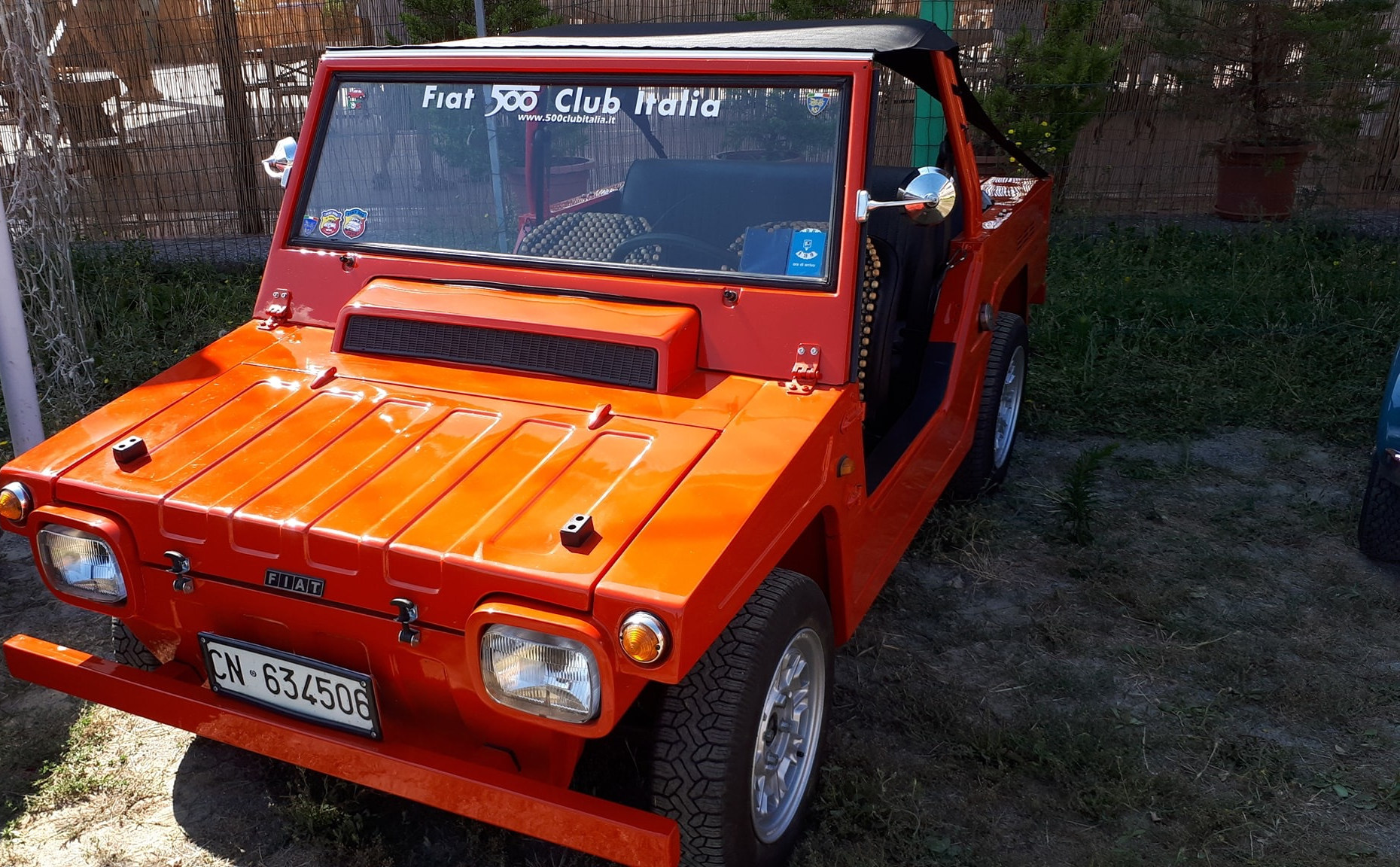
Jungla 126
Later Savio built the Jungla on other underpinnings too: on the Autobianchi A112, the Fiat 124 and the Fiat 126. The Fiat 126 stays close to the Fiat 500 – it took over its air-cooled twin, enlarged to 594 cc.
The original leaflet calls the vehicle «jungla 126 Savio» and advertises it with the line «La grande versatilità di impiego fa della Jungla un moderno veicolo per l’industria e per il tempo libero» – its great versatility makes the Jungla a modern vehicle for industry and for leisure. On the back are the works address at Via C. Corradino 8 in Borgo S. Pietro and the note that the cars are sold throughout Italy through Fiat dealers.
The body is a four-seat torpedo; floor pan and structure are of sturdy steel sheet. The two doors, made of light steel tube and waterproof canvas, lift off easily, and the windscreen folds forward onto the bonnet. There are two separate seats at the front and a one-piece bench at the rear. The car comes with a waterproof fabric hood on a folding metal frame, a spare wheel, and a tool bag and jack in the front bonnet. The interior is heated with warm air taken from the engine’s cooling circuit.
Technical data Jungla 126
| Engine | two cylinders in line, air-cooled by centrifugal fan, at the rear |
|---|---|
| Capacity | 594 cc |
| Bore × stroke | 73.5 × 70 mm |
| Output | 23 hp (DIN) |
| Valve gear | overhead valves, crankshaft on two bearings |
| Gearbox | four speeds and reverse, fourth an overdrive; second, third and fourth synchronised |
| Final drive | ratio 8/39, differential in the gearbox casing |
| Brakes | hydraulic on all four wheels, two independent circuits, automatic adjustment |
| Front suspension | independent, transverse leaf spring, telescopic dampers |
| Rear suspension | independent, coil springs, swinging arms, telescopic dampers |
| Wheels | disc wheels with 4 × 12" rims, 135-12 radial tyres |
| Fuel tank | about 21 litres, ahead of the rear axle |
| Electrics | 12 V, 230 W dynamo, 34 Ah battery |
| Unladen weight | 550 kg in running order, with spare wheel, tools and accessories |
| Payload | four persons and 40 kg |
| Top speed | over 105 km/h |
| Gradeability | 25 % |
| Angle of tilt | 35° |
| Length | 3025 mm |
| Width | 1380 mm |
| Height | 1380 mm |
| Wheelbase | 1840 mm |
Brochure