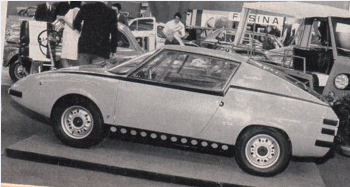
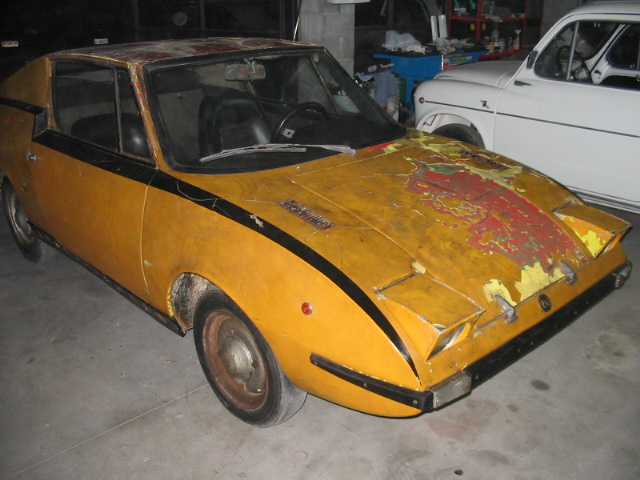





Carrozzeria Caprera produced bare bodyshells for various car makers. In 1959 the firm built cars of its own for sale for the first time – two models on Fiat 600 underpinnings. For the 1969 show a coupé was built, made twice with small differences.
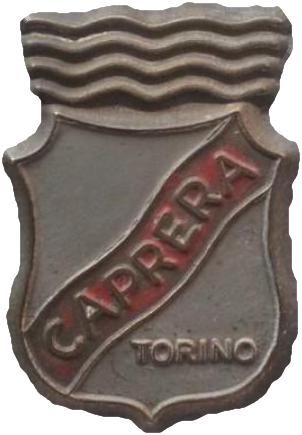
Caprera was a small Turin coachbuilder, named after the Via Caprera in which it stood. At first it lived not on models of its own but on contract work for the big names of the trade: Caprera assembled and painted bare bodyshells and set up a mechanised paint line for the purpose. In 1959 the firm ventured a car of its own. On Fiat 600 underpinnings came the «Capri» spider and the «Amalfi» saloon; both found too few buyers and quickly disappeared again. After that Caprera kept its head above water with commercial vehicles – vans and minibuses on the Fiat 600 T – and with upmarket trim for production cars: better seats, chrome embellishment, special colours, its own hubcaps and a crest as its mark. The 500 L shown here also comes from that line. Alongside this the ambition for show pieces remained: an estate and several coupés on the Fiat 850, latterly the «Ragno» coupé. For the period after 1971 no further work is known.
A brochure from the works shows that the coupé came in two versions: the basic one was called Lem, the better-equipped one Ragno-S. Both are offered as a two-seater coupé on the Fiat 500 chassis. For the Lem the sheet lists a resin body on a tubular frame, a wrap-around roll bar built into the body, an impact-absorbing dashboard, bucket seats, widened wheel rims and an aerodynamic line of aeronautical inspiration. The Ragno-S has the same features and in addition anatomically shaped seats with a built-in headrest and seat belts.
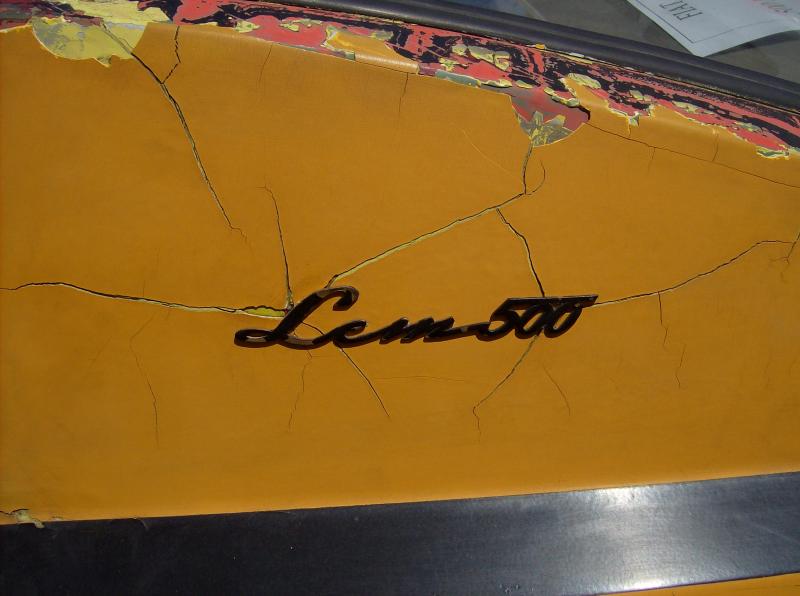
The prices are written on the sheet by hand: 820,000 lire for the Lem, 850,000 lire for the Ragno-S; next to the Ragno-S the number 595 is noted as well, the capacity in cubic centimetres. Across the foot runs the slogan «E’ la vettura dei giovani ‹in›» – the car for the young people who are «in». On the car itself the name returns: a «Lem 500» script in the same lettering as the heading of the brochure.
| Body style | two-seater coupé |
|---|---|
| Chassis | Fiat 500 |
| Capacity, Ragno-S | 595 cc |
| Bodyshell | resin on a tubular frame |
| Roll bar | wrap-around, built into the body |
| Dashboard | impact-absorbing |
| Seats, Lem | bucket seats |
| Seats, Ragno-S | anatomically shaped, with built-in headrest |
| Seat belts | Ragno-S only |
| Wheel rims | widened |
| Line | aerodynamic, of aeronautical inspiration |
| Price, Lem | 820,000 lire |
| Price, Ragno-S | 850,000 lire |
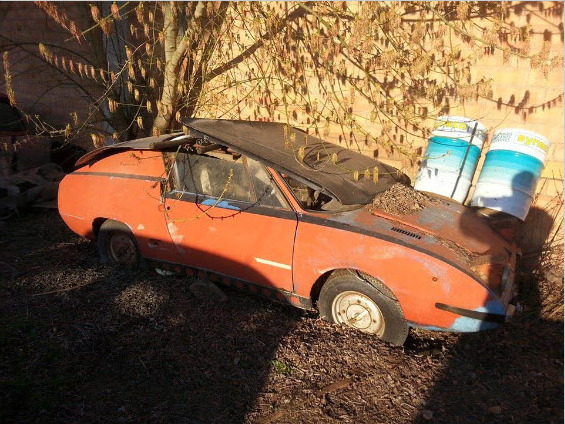
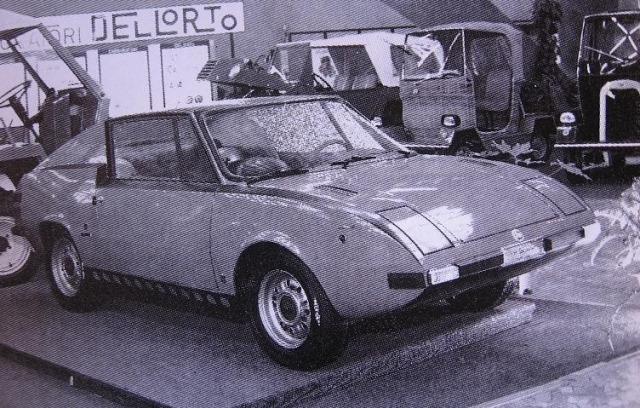
«Ragno» is the Italian word for spider. Caprera showed the low coupé with the pop-up headlamps at the Turin show; beneath it lies the chassis of a Fiat 500 F. The bodyshell is made of resin and sits on a tubular frame. For the Ragno-S a capacity of 595 cc is given. It never reached production – manufacture was too expensive and the body too heavy for the small twin. For a long time the car was thought to be a one-off, until a second one turned up in Italy. Which of the two stood at the show has not been established to this day. The car was offered in two versions; the Ragno-S was the better-equipped form of the Lem.
The second car is not a special body but a standard Fiat 500 L upgraded by Caprera. It shows in the «Caprera Torino» crest next to the lettering on the tailgate and in the same crest in the speedometer glass – the speedometer reads to over 140 km/h instead of 130. Such versions also had better seat coverings, special colours and their own hubcaps. How many cars were prepared this way is not known.