




Head office and works:
Via di Tor Cervara 286
Rome
(1960–1987)
Voxson goes back to the Fabbrica Apparecchi Radio e Televisione (FART), founded in Rome in December 1951 by Armando Boccia and Aldo Marcucci as a small business in Via Crescenzio. In 1952 the engineer Arnaldo Piccinini, who had previously worked at Autovox, joined the firm; from 1954 he held the majority, and the sets came onto the market under the Voxson name.
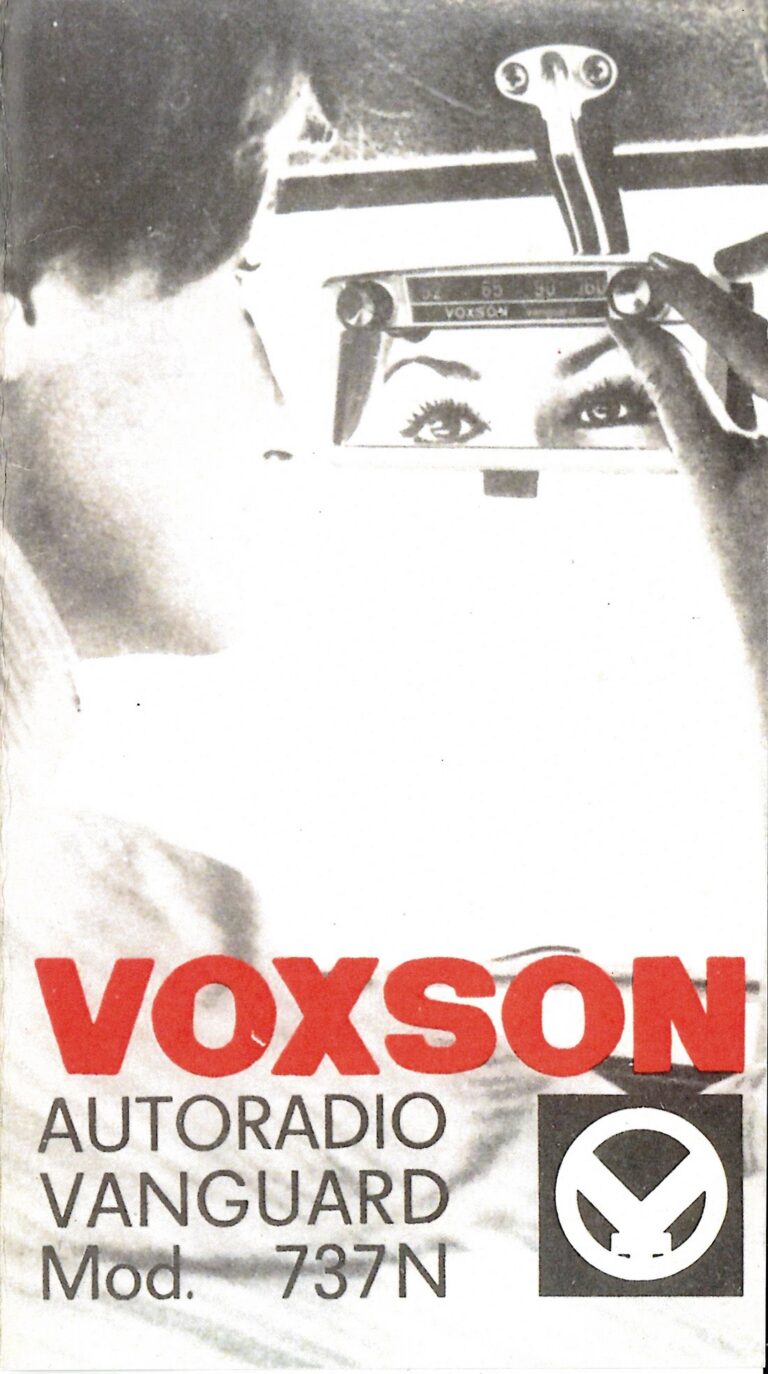
The company – FARET S.p.A. from 1958, Voxson S.p.A. from 1969 – built radios, television sets and car radios, and from 1960 occupied a new factory in Via di Tor Cervara in the east of Rome, where up to 2400 people worked in the 1960s. Well-known car radios included the Vanguard, a transistor set built into the rear-view mirror, and the Sonar with a Stereo 8 player, presented at the Paris Motor Show in 1967.
In 1971 the British EMI group took over half of the company, later the majority; in 1975 it passed to a company in Liechtenstein. Production came to a standstill around 1980 and a long insolvency procedure followed; in 1987 the last 1353 employees were dismissed. The brand is no longer active today.
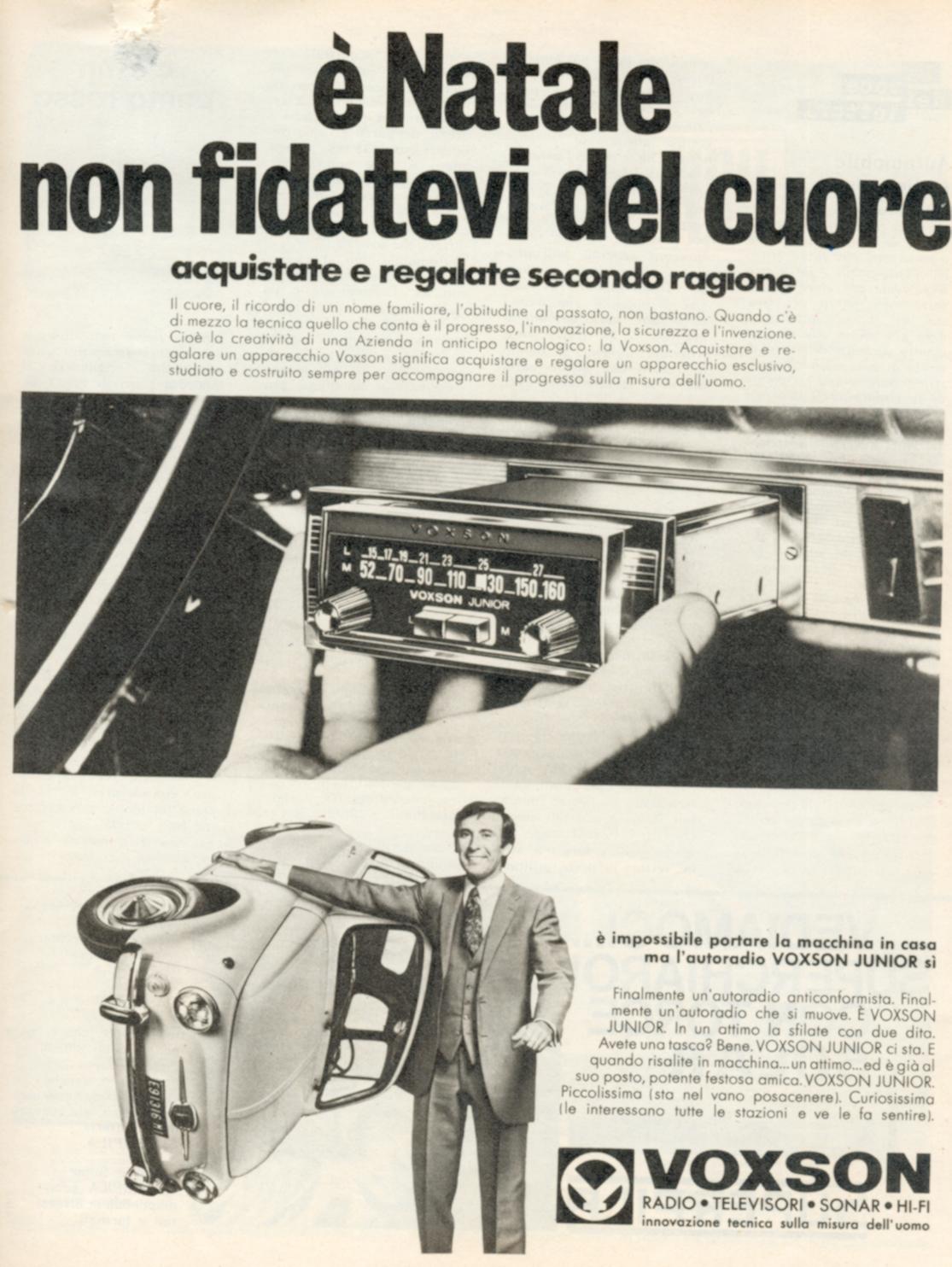
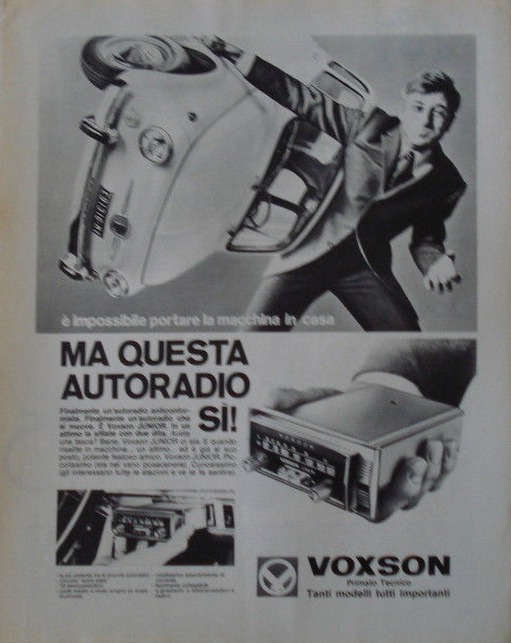
The small Voxson Junior car radio had a pull-out slide-in unit and, according to Voxson advertising, fitted into the ashtray recess. In 1968 Voxson issued dedicated installation instructions for fitting the Junior 901 and 902 to the Fiat 500.
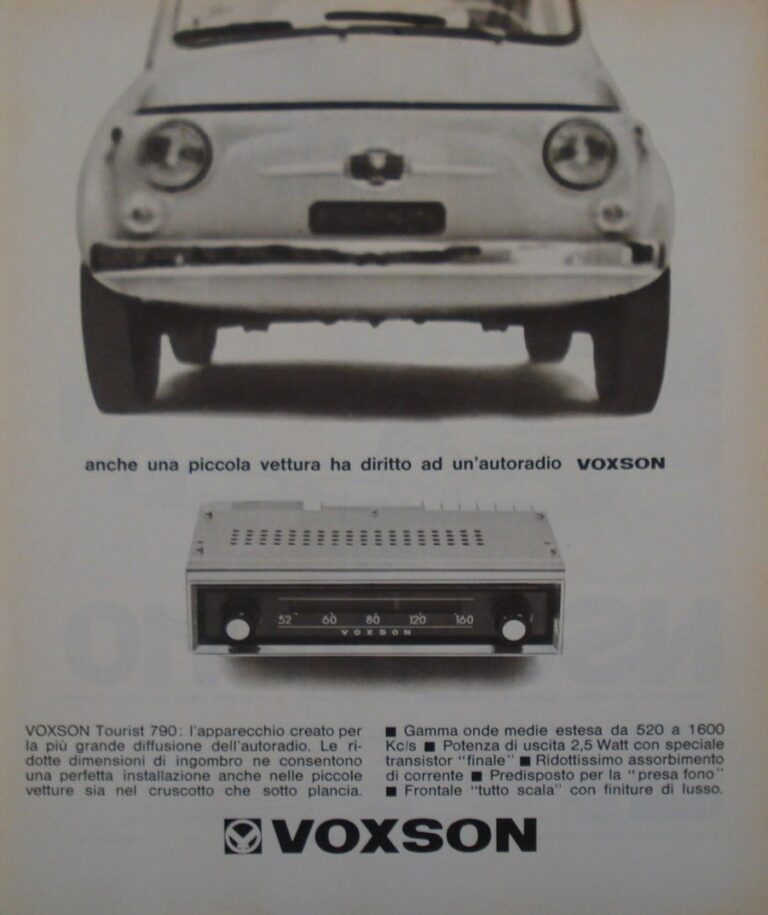
Voxson advertised the Tourist 790 specifically for small cars such as the Fiat 500: it could be fitted in the dashboard or underneath it. It received medium wave, delivered 2.5 watts and ran on 12 volts with three valves and two transistors. Built in 1964, price 39,000 lire.
How to tell the Vanguard 736, 737 and 738 apart
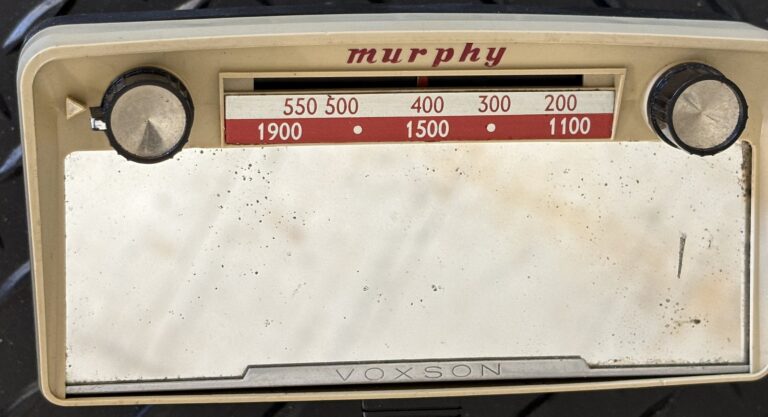
This version of the Vanguard bears the name Murphy and has a dial in metres for medium and long wave. The matching loudspeaker and amplifier unit runs on either 6 or 12 volts, with positive or negative earth. Wavebands and supply voltage therefore match the model 738.
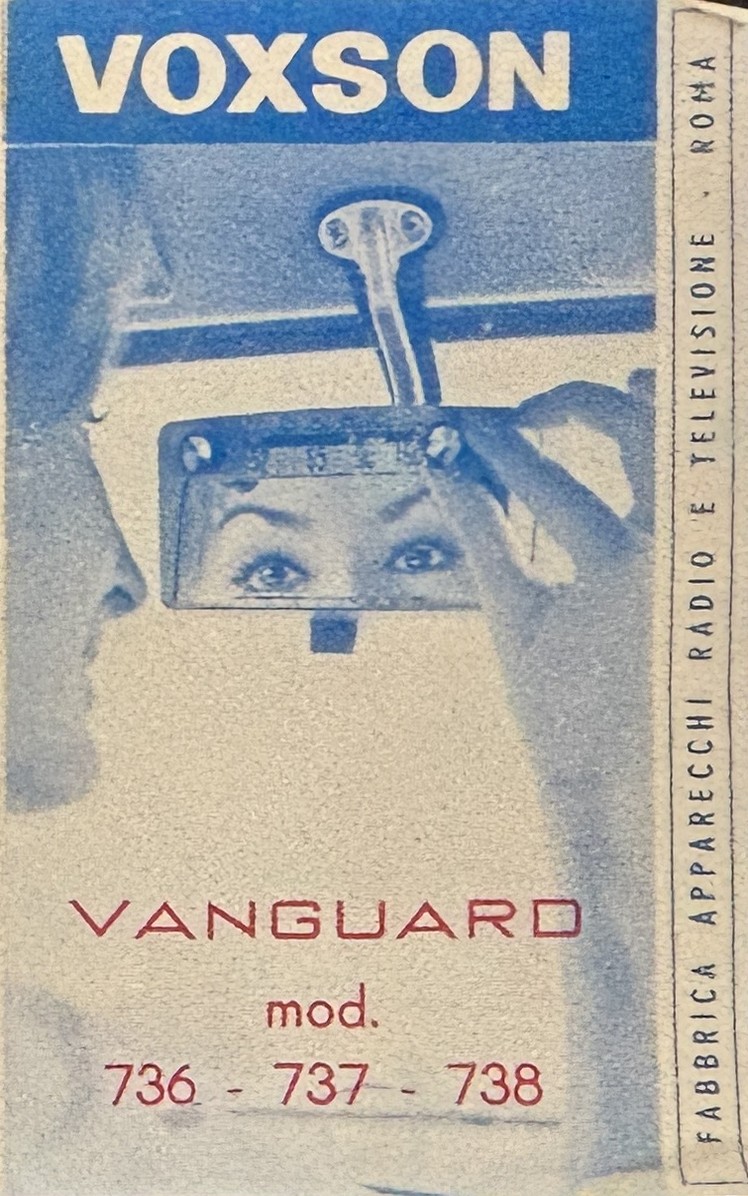
On the Vanguard, the control unit with dial and knobs replaces the interior mirror; its pivot fits the mirror bracket of the FIAT 500, 600 and 1100. A ferrite antenna is built in, so no external aerial or hole for it is needed. Loudspeaker and output stage sit in a separate housing under the dashboard. The set has 6 transistors and 2 diodes, receives medium wave from 520 to 1600 kHz, delivers about 2 watts and draws about 1 ampere. It runs on 6 or 12 volts, with negative or positive earth; the mirror unit itself ran on 6 volts. The fitting instructions show installation in the Fiat 500 D, the Fiat 600 D, the Autobianchi Bianchina and the NSU Prinz.
How to tell the Tanga NS models apart
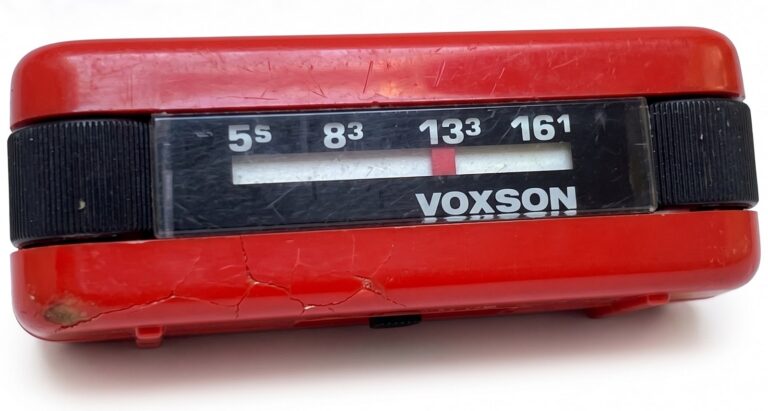
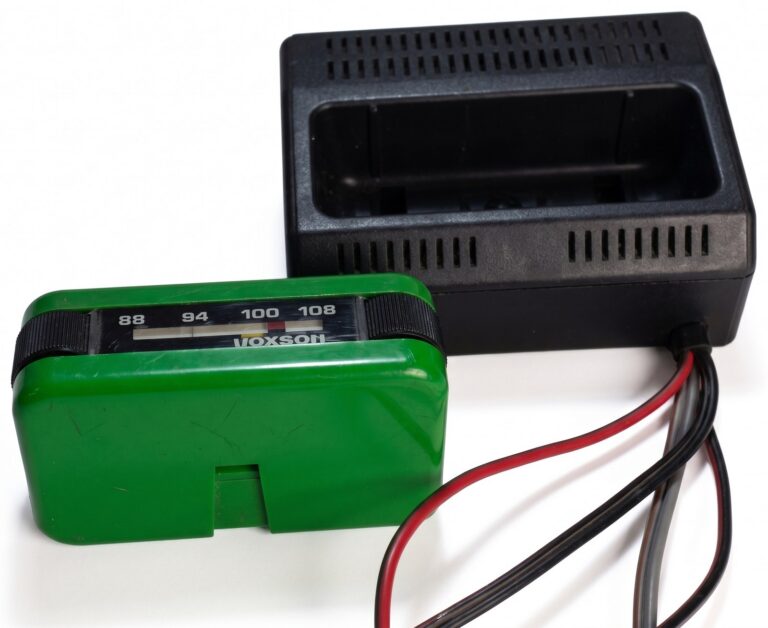
The Tanga NS came in four colours, each for one waveband: red for medium wave, yellow for long wave, green for FM, blue for FM with four preset stations. The pocket unit pulls out of the permanently fitted base and can also be used at home with a mains adapter.
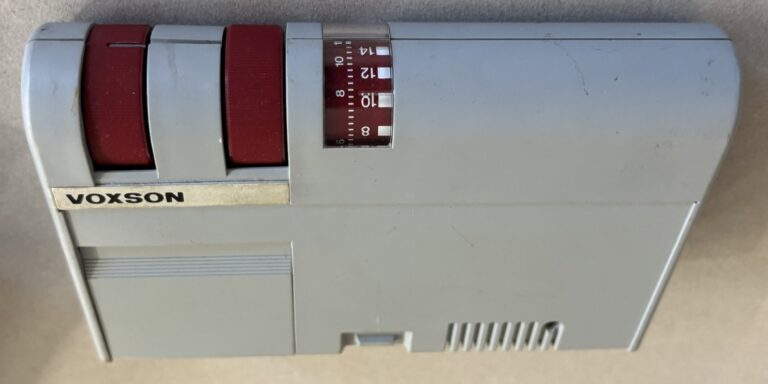
Medium wave only, 12 volts, plastic housing, external loudspeaker. Built from 1977 to 1980. Designed by Rodolfo Bonetto.
FM only, 12 volts, 4.7 watts. Plastic housing, supplied with a leather case and a holder. Built in 1980. Designed by Rodolfo Bonetto.
Voxson offered the RA 2000 as an “autoradio portatile”: a removable medium-wave car radio (520–1620 kHz) that could be converted into a portable radio. In the car it ran on 12 volts with 4 watts, as a portable on six 1.5-volt batteries with 280 milliwatts. The circuit was fully transistorised with two integrated circuits; a bracket for fitting under the dashboard was included.
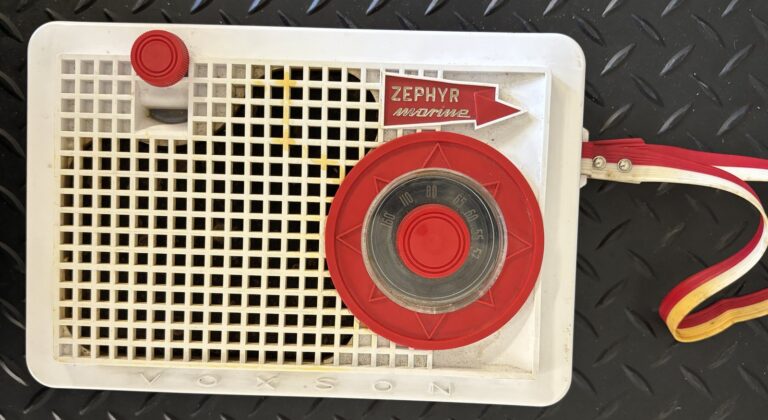
The Zephyr 4 was a fully transistorised medium-wave pocket radio with six semiconductors and an 8 cm loudspeaker; it ran on six 1.5-volt batteries and weighed 0.65 kg. Placed in the waterproof “Zephyr marina” case, it could still be operated on a boat. Voxson stated that the case was protected by an international patent. The set shown still carries its original sale price: 25,000 lire.
Warranty certificate for Voxson car radios. The warranty ran for six months from the date of purchase and was normally provided by the service station of the dealer who had sold the set.