



Head office and works:
Via Salaria 981
Rome
(from 1953)
Autovox has its origins in the Industria Radiotecnica Italiana, founded in Rome in 1933 by Giordano Bruno Verdesi. At first it built radio equipment for professional use. After the war the company turned to car radios: from 1945 its sets appeared under the Autovox brand, and in 1946 the first Autovox car radio was shown at the Milan Fair.
In 1953 the business became Autovox S.p.A., with a new factory at Via Salaria 981 in Rome, where television sets and aerials were made alongside car radios. Autovox supplied car radios for many Fiat models; in the early 1970s almost 3000 people worked for the company.
In 1971 it passed to the American Motorola group, in 1980 to Gefinco AG of Zurich and in 1983 to Italian owners, who carried it on as Nuova Autovox. After years of crisis, operations ceased in 1996. Today only the brand name remains.
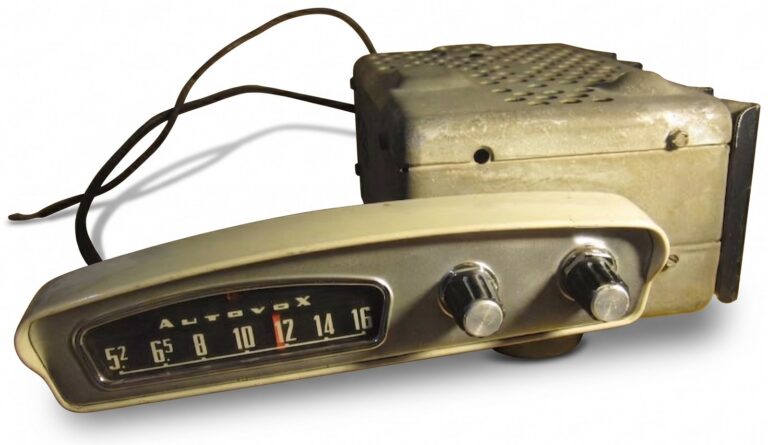
The RA 106 car radio (1960–1962) was built for the Fiat 500 and 600 and the Autobianchi Bianchina, with a front panel specific to each car. It used valves and one transistor, received medium wave only and ran on 12 volts.
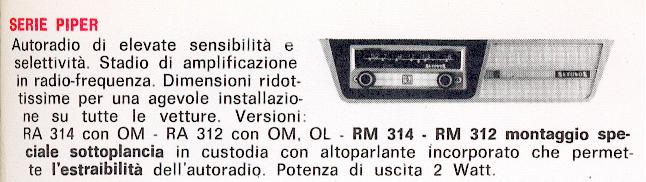
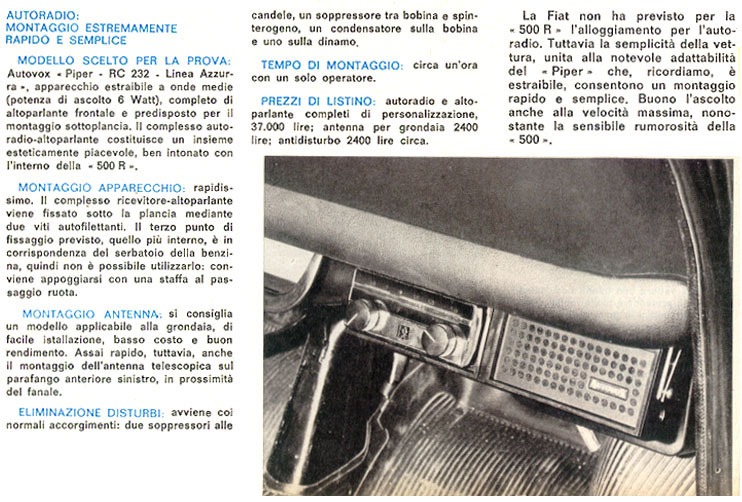
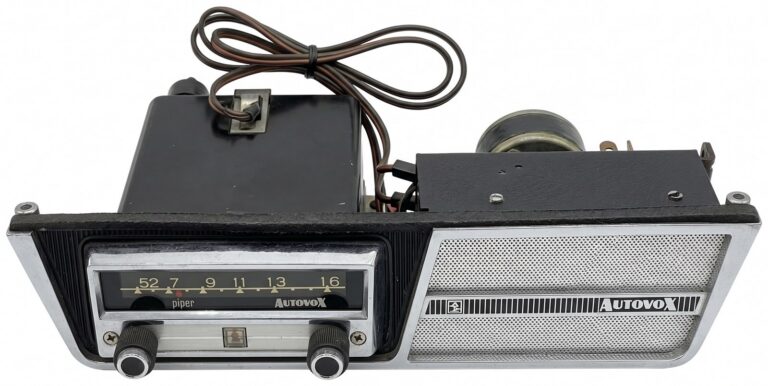
Fiat provided no space for a car radio in the Fiat 500 R. A magazine therefore fitted the Piper RC 232 “Linea Azzurra” under the dashboard with two screws; the job took about an hour, and radio and loudspeaker together cost 37,000 lire.
How to tell the RA 90 from the RA 95
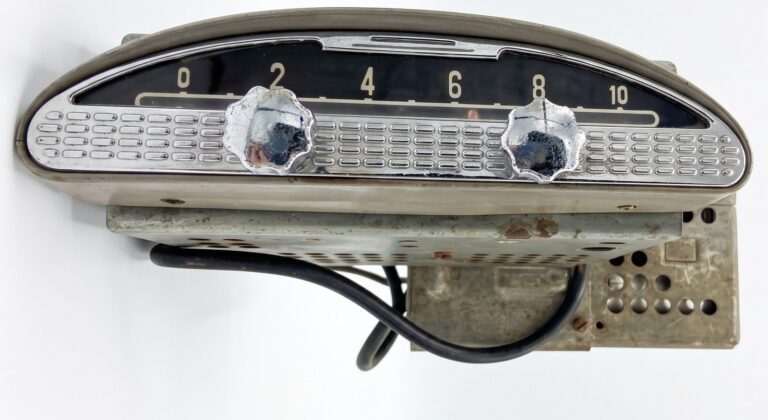
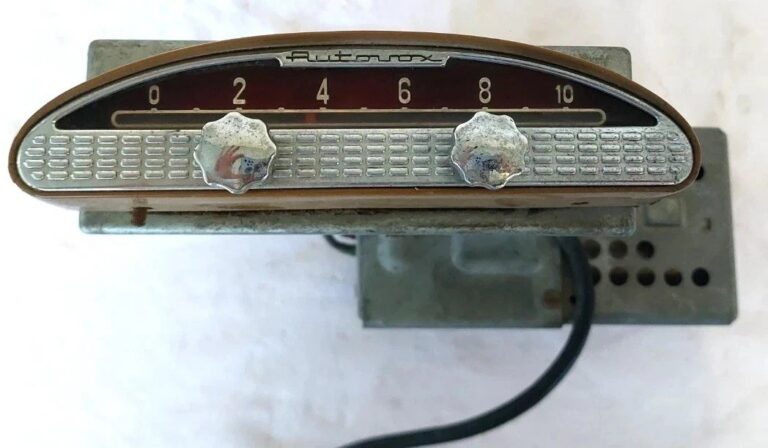
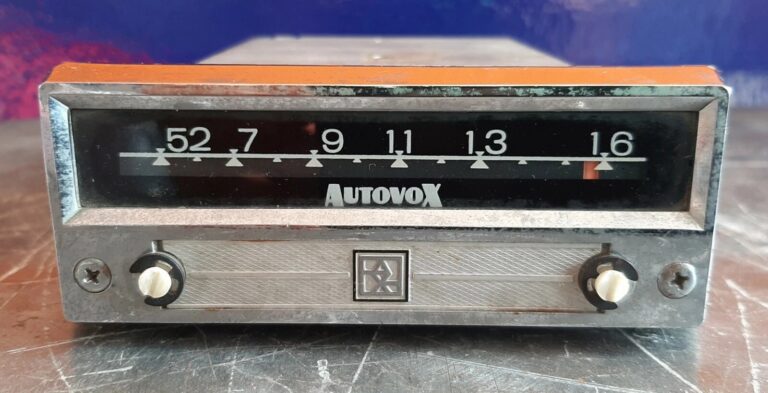
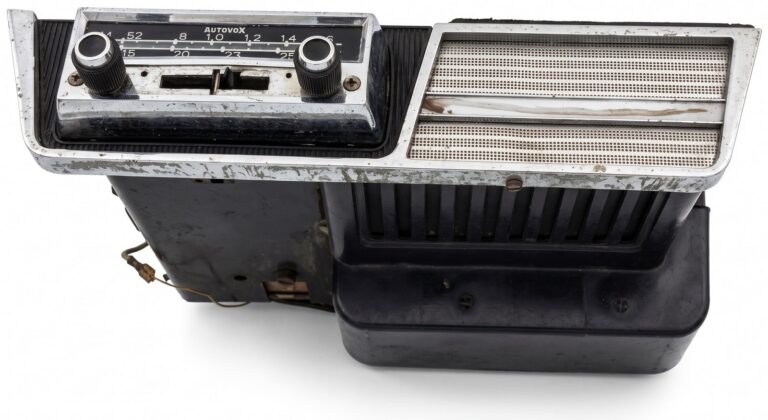
From the front the two look the same: oval chrome front, dial from 0 to 10, two star-shaped knobs, same dimensions. The difference is inside. The RA 90 runs on 12 volts only and has valves from the 12-volt series, whose type numbers begin with “12”. The RA 95 runs on 6 and 12 volts and has valves from the 6-volt series, whose type numbers begin with “6”. They can be identified with certainty from the type plate or the valves.
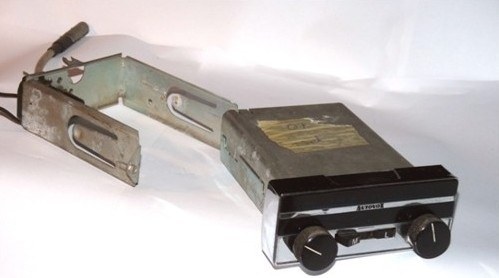
The Autovox RA 90 was introduced in 1957/58 as a medium wave car radio for the Fiat 600 and was also fitted to the Fiat 500; the 600 Multipla had the sister model RA 91. It uses four valves and consists of two units: the receiver and a separate power supply with a vibrator for the 12-volt electrical system. The loudspeaker was connected externally, and the output was 1.5 watts.
The Autovox RA 95 came onto the market in 1958/59 and was advertised for the Fiat 500 and 600. It uses four valves, receives medium wave only and delivers 1.7 watts. Thanks to a vibrator in the separate power supply it ran on either 6 or 12 volts. At its launch it cost 28,500 lire.
The Autovox RA 106 was built from 1960 to 1962 for the Fiat 500 and 600, the Autobianchi Bianchina and the Alfa Romeo Dauphine; each car had its own front panel in front of the permanently fitted housing. The set uses four valves and one transistor, receives medium wave only and runs on 12 volts. At the end of 1962 the set alone cost 19,700 lire.
How to tell RA from RM and 312 from 314
| Type | removable receiver |
|---|---|
| Wavebands | medium and long wave |
| Loudspeaker | separate unit required |
| Housing | metal |
| Price in 1971 | 28,900 lire |
| Type | removable receiver |
|---|---|
| Wavebands | medium wave only, 520–1610 kHz |
| Output | 2 watts into 8 ohms |
| Power supply | 12 volts, negative earth, 0.3 amperes |
| Loudspeaker | separate unit required |
| Housing | metal |
| Receiver body (W × H × D) | 92 × 38.5 × 120 mm |
| Front panel (W × H) | 118 × 45.5 mm |
| Weight | 0.65 kg |
| Price in 1971 | 26,000 lire |
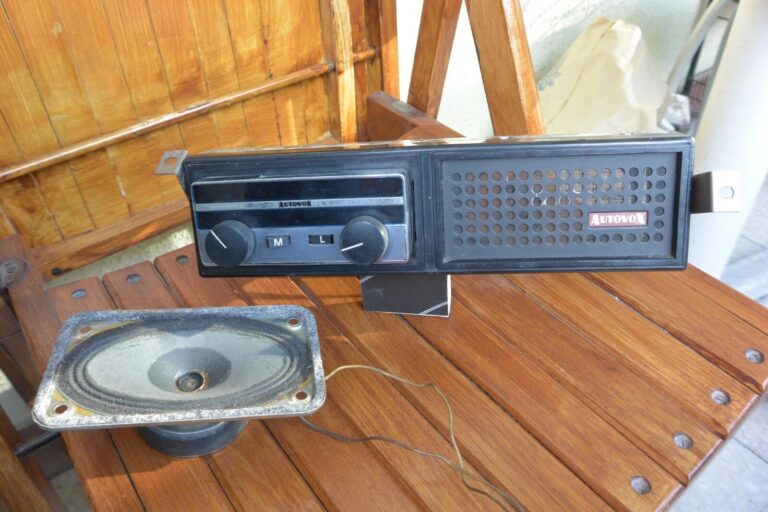
| Type | complete set: removable receiver in a housing with built-in loudspeaker, screwed under the dashboard |
|---|---|
| Wavebands | medium and long wave |
| Type | removable, front loudspeaker, for fitting under the dashboard |
|---|---|
| Wavebands | medium wave only |
| Output | 6 watts |
| List price | radio with loudspeaker, complete, 37,000 lire |
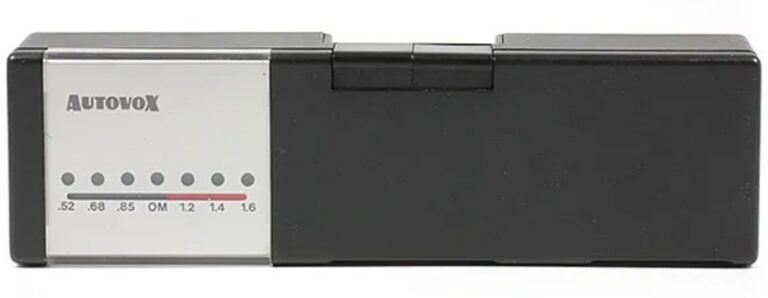
| Type | removable car radio with patented automatic snap-in mount, also pocket-sized |
|---|---|
| Wavebands | medium wave 520–1610 kHz |
| Output | approx. 6 watts maximum |
| Power supply | 12–14 volts, negative earth |
| Semiconductors | 4 × BF 274 transistors, TBA 810 S integrated output stage |
| Receiver | 176 × 50 × 29 mm, 270 g |
| Loudspeaker | accessory, ordered separately (code 2281.0151) |
| Instructions | Dati tecnici e istruzioni d’uso (P 2378) |
| Type | complete set: RA 312 with loudspeaker and mounting frame for fitting under the dashboard |
|---|---|
| Wavebands | medium and long wave |
| Price in 1971 | 34,500 lire |
| Type | complete set: RA 314 with loudspeaker and mounting frame for fitting under the dashboard |
|---|---|
| Wavebands | medium wave only |
| Price in 1971 | 31,700 lire |
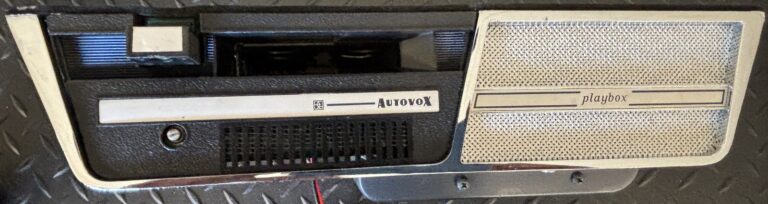
The Playbox is an Autovox cassette player for fitting under the dashboard. Player and loudspeaker sit in a shared chrome frame, and the cassette is inserted from the front.
We still know little about the Playbox. Anyone who knows something about it — a type number, a year of manufacture, documents — is welcome to get in touch.